Quakers In London

Tag: faith

  • Confident Quaker Voice Event

    Confident Quaker Voice Event

    November 7 @ 10:00 am – 4:00 pm

    What’s really happening for the person next to you in meeting?

    You sit in worship together week after week โ€” but do you know what’s going on in their head, in their heart? Do they believe or experience what you believe or experience? Have you ever wanted to ask, and hear the honest answer?

    Join us for a full day workshop to explore exactly that: how we talk to each other about our spiritual experience. The day is designed to help Friends open up conversations that often stay unspoken – and we’re looking forward to piloting at Wandsworth meeting house.

    Over the day, we’ll:

    • Unpack what we actually do in worship – including the words we reach for to describe it.
    • Name the barriers that stop us sharing – and what we lose by staying quiet
    • Hear some definitions of Quakerism and explore spiritual practice.
    • Discover what we gain when we do share, and hear from others.
    • Find real opportunities for these conversations, and what each of us can do to make them happen.

    Join us from 10am on Saturday 7 November – we’ll break for lunch at around 1pm and finish by 4pm. Please bring your own food for lunch.

    To book a place email joshs@quaker.org.uk.

    Wandsworth Meeting House

    59 Wandsworth High St
    London, SW18 2PT United Kingdom
    View Venue Website
  • Quaker Witness at the National March for Palestine

    Quaker Witness at the National March for Palestine

    October 10 @ 12:30 pm – 3:00 pm

    On Saturday 10 October Quaker Palestine Solidarity are coordinating a Quaker Bloc on the national Palestine march.
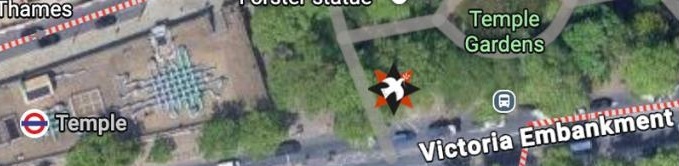
    12: 30 Meeting for Worship inside Temple Gardens, Victoria Embankment, WC2R 2PH. Look out for the green QPS banner.
    1:00 Join the March
    https://qps.org.uk/event/quaker-witness-at-the-national-march-for-palestine/

    Quaker Palestine Solidarity

    View Organizer Website

  • British Quaker, American Friend: Reflections on BYM from across the Atlantic

    British Quaker, American Friend: Reflections on BYM from across the Atlantic

    Teran Chapis: British Quaker; American Friend, shares an extract of their report to Hartford Monthly Meeting in Connecticut, United States regarding Britain Yearly Meeting (BYM), which took place over four days in May.

    A recurring theme in conversations between Friends [at BYM] was our different understandings of God. Friends identified themselves as atheist or theist Quakers, and asked each other about their individual unique beliefs. One Friend from North Scotland said goodbye to me in the wee hours of Saturday morning by passionately declaring that I should minister the next day because: โ€œI am excited to hear the Lord speak through you.โ€ When he left the room I thought about it for a moment and said: โ€œHe doesnโ€™t believe in God.โ€ 

    At Meeting for Worship at Friends House the Sunday before Yearly Meeting, a Friend ministered that when she described a conference about God to a fellow Quaker, where a group of Friends organised all their thoughts about how they understand God as a concept, he asked her: โ€œWell does God understand you as a concept? Does God believe in you?โ€

    The following evening, on the walk home from a British Sign Language event, a Friend asked me โ€œwhy are you crying?โ€ 

    And I told them: โ€œI promise these are happy tears. Iโ€™ve just been thinking about how you said tonight that you donโ€™t believe in God because you donโ€™t believe that help will ever come. Because people like you are my proof of God. You are the help that came. You, my Friend, are my evidence for God.โ€ 

    I thought about the ministry that I had heard at Friends House the previous morning, and told them: โ€œMaybe asking the right question is more important than having the right answer. Maybe the question isnโ€™t whether or not we believe in God, but whether or not people see God in you.โ€ 

    And through a combination of American Sign Language, British Sign Language, lip reading, telepathy, and hugs, we cried and discussed this as we made the trek home through the dark and the rain of North London.

    It felt like a prank from the universe when my first Deaf friend after studying ASL uses British Sign Language. But Iโ€™m slowly relearning to sign with a different grammar structure and with lip patterns. When learning to sign BSL with fellow signing Friends in London, I learned that 1.) the request for a sign language interpreter at Britain Yearly Meeting this year was denied, and 2.) there arenโ€™t widely used official signs for the word โ€œQuakerโ€ or Quaker concepts. To fill in the gaps, we signed โ€œQuakerโ€ by shaking the BSL fingerspelling sign for Q, or sometimes, inspired by the name and profile picture of a Quaker groupchat, we use the BSL sign for geeseโ€ฆ meaning โ€œQuacker.โ€ 

    When I recounted the events of BYM to a lowercase f-friend, he said that once again, the strangest coincidences seem to happen to me. Years ago, before I ever stepped foot into a Quaker meeting, developing a disability inspired me to spend some forced sick time studying ASL. Little did I know what I was really preparing for.

    Inspired by conversations at Britain Yearly Meeting 2026, I am currently researching the history, experiences, and signs used by Deaf and signing Friends in Britain and the United States (including hearing, nonverbal Friends), and working on research proposals for research masterโ€™s/fellowships to conduct a formal study. If anyone is interested in connecting with me about this topic, or connecting with Deaf/signing Friends, donโ€™t hesitate to reach out to me at teranriley@gmail.com!โ€

    – Teran Chapis

    London Young Adult Quaker Meeting, Young Friends in Britain

    Inspired to attend Yearly Meeting? Yearly meeting now takes place over multiple sessions, with the most recent having taken place in Manchester last month. The last session for 2026 scheduled for 21 November in London. You can register to attend here: https://www.quaker.org.uk/ym/bookings. We hope to see you there!
  • Silent Walking Vigil for Peace

    Silent Walkingย Vigilย for Peaceย being held in central London onย Saturday 19 September 2026. You may already be aware of the vigil, as Quakers have been spreading the word within Quaker meetings, communities and organisations across the UK.

    There now have more than 300 people indicating that they will be attending the vigil and the organisers are encouraging anyone who hopes to be there to sign up on their website https://quakervigilforpeace.org to help with planning.

    Additional information about the vigil has recently been added to the website, including details of the walking route, with the start and end point.

    Various complementary events are being arranged by Local and Area Meetings around the country, to coincide with the vigil enabling those who are unable to travel to London to be in solidarity.ย  Events include a local peace vigil, a peace run, a simultaneous meeting for worship to uphold the silent walking vigil.

    If your meeting is organising anything as part of this event, please let us know at quill@quakersinlondon.org and we can share the details on our email newsletter.

    The vigil planning team have also asked those planning a complimentary event to let them know via their online contact form.


  • Online Worship In North Wales

    Online Worship In North Wales

    Could London Have an Online Quaker Meeting? Lessons from Around the World

    When North Wales Quakers recently set up a fully online Local Meeting, it raised an intriguing possibility. If a Quaker meeting can exist entirely online in North Wales, could the same idea work in London?

    At first glance it might seem unnecessary. London already has many meetings. But what opportunities could something like that unlock? Ressearch into digital worship suggests that there’s lot’s to be excited about when exploring new ways to grow and support our faith.

    What other traditions have discovered

    Across faith communities, a clear pattern has emerged. VR Church – a congregation that meets entirely in virtual reality – draws people with disabilities, social anxiety, and participants from dozens of countries. Many report that the anonymity of avatars makes spiritual conversation easier, not harder. Jewish communities experimenting with online minyanim during the pandemic found that participants joined from across different countries, creating global prayer communities that would never have existed in a physical synagogue. Buddhist groups like Triratna have run online meditation and study groups for years, finding that digital spaces help people build strong practice habits even when they live far from centres.

    There’s a common thread through these examples: online worship tends to reach people who struggle to access physical congregations – those with disabilities, carers, people in remote locations, and those exploring faith cautiously or privately.

    But it also has real limits. Informal conversation, spontaneous pastoral care, and the emotional texture of physical presence are harder to replicate online.

    Why Quakers may be unusually well suited to digital worship

    Among religious traditions, Quaker worship may be particularly compatible with online space. Meeting for Worship relies on shared silence, reflection, and attentiveness to the Spirit – minimal ritual, no performance. During the pandemic, many Friends discovered these elements translated surprisingly well to Zoom. Quakerism is an “experimental,” religion, and there are suprising ways to find the spirit of God in the every day.

    Online Quaker worship may not feel like a diluted version of the real thing. It may simply be a different way of gathering in the same silence.

    A quiet opportunity for London

    In a city as large and fast-moving as London, geography is a real barrier. A meeting that requires an hour of travel each way is simply inaccessible to many people: frequent travellers, those on the edges of the city, people with caring responsibilities, or seekers who want a low-threshold way to explore Quakerism.

    The North Wales experiment invites London Friends to ask if we could we do something similar. Not as a replacement for our meeting houses, but as an additional doorway into our shared, simple testimony.

    If this idea interests you, or if you’d like to explore what starting an online Local Meeting in London might involve, then challenge yourself to live adventurously. What could you create?