Quakers In London

Author: admin

  • Regional coordinators needed for peace gathering

    Regional coordinators needed for peace gathering

    Can you help?

    September 19th 2026 – London

    Plans are underway for a National Quaker peace gathering in London onย Saturday 19 September 2026.ย  This date has been chosen forย its proximity to the United Nations International Day of Peace. The event will take the form of aย Silent Walking Vigil. Key details are availableย at:ย https://quakervigilforpeace.org/.ย  The websiteย includes core information about the vigil and an opportunity to express interest and sign-up for updates.ย 

    Might you be interested in getting involved as a local organiser?

    • Local organisers would tell everyone about the Vigil.
    • Explore having a local Vigil for Friends who can’t travel to the event
    • Be a point of contact with the organisers

    If this would interest you, please contact Josh at joshs@quaker.org.uk

  • University Meetings as a Gateway to the Wider Quaker Community

    University Meetings as a Gateway to the Wider Quaker Community

    Agnes Sales reflects on her experience of the University of Bristol Quaker Meeting

    Following the event on the 21stย July ย about outreach to universities, Agnes Sales, a Friend involved in the Quaker work at Bristol University has shared the following reflections.ย 

    If you would be interested in joining with other friends across London in talking about university work in the city, please email Josh (joshs@quaker.org.uk) to be connected.

    The meeting at the University of Bristol has been an integral part of my Quaker faith and weekly routine. Before joining, I was already a regular at the Multifaith Chaplaincy and had attended Central meeting a couple of times that year. One day in October, I saw a couple of people sitting in silent worship in the quiet room, decided to join them.

    Initially, there were only three of us, but I invited my friends and we steadily grew – I think our biggest meeting had 17 people! Some people came and went and a few of us turned up consistently every Wednesday lunchtime. We started doing โ€˜Quaked potatoesโ€™ and a few of us started attending Redland meeting and joining the Becoming Friends course. The University meeting has provided a gateway to the wider Quaker community, enabled me to make new friends of all ages and have a consistent way of engaging with my faith when I cannot come on a Sunday morning. 

    I have always appreciated the more casual nature of our meetings, where we have afterword, food and conversation and where some people move around and minister in ways that they donโ€™t feel comfortable to do elsewhere. We have developed a real community that feels strong and fulfilling.

    The chaplains of other faiths in the Multifaith Chaplaincy have also provided great company and support, whether that be pastoral support or simply making tea. Iโ€™m sure that a Quaker chaplain would be appreciated not only by the students who regularly attend the Quaker meeting but also other students who who may have questions about Quakerism or need pastoral support.

  • Become a Quill Contributor

    Become a Quill Contributor

    The Quill exists because we want to help make Quakers in London feel like one community. A newsletter is one of the oldest and simplest ways a community can hold itself together, sharing thoughts, ideas and events.

    We’re looking for contributors, and we’d love to hear from you. Here’s some ideas of ways you could get invovled:

    1.Share what your meeting is already doing

    Many local meetings have their own newsletters or magazines, full of reflections, news, and stories that rarely travel beyond their own membership. If your meeting produces something like this, we’d be glad to help carry those words to a wider London audience. An article that resonated with your own meeting might speak just as powerfully to Friends across the area – and it costs you nothing extra to share it. If you’ve already written something, or if your newsletter editor would be willing to pass pieces along, please get in touch.

    2. Explore your faith in writing

    We’re also looking for creative and reflective submissions – pieces that help us think more deeply about what it means to live as a Quaker today. This might be a personal reflection on a meeting for worship, a meditation on a passage of scripture or a Quaker text, a poem, or simply something that’s been sitting with you and feels ready to be shared. There’s no fixed format. What matters is that it comes from an honest place.

    Writing for a community like this is itself a form of ministry. It asks us to articulate what we often leave unspoken, and helps us cultivate an important part of a spirit-led Area meeting: to support the spiritual growth of its members.

    3. Spread the word about Quaker witness

    If your meeting or a Quaker-linked group you’re involved with is doing witness in the world – whether that’s climate action, peace witness, work with refugees, or anything else rooted in Quaker values – The Quill can help you reach a wider circle of Friends who might want to get involved. A short piece about what you’re doing and why, and how others can join or support you, is exactly the kind of thing a community newsletter is for. Wider reach means more hands, more voices, and more momentum.

    Why this matters

    London is a large and scattered Quaker community. Meetings are spread across the city, and it’s easy for Friends in one part of London to have little sense of what’s happening in another. A newsletter won’t fix that on its own, but it can help. It creates a small, regular point of contact – something to read on a Sunday morning or a Tuesday evening – that reminds us we’re part of something larger than our own meeting.

    There’s also something that happens when a community writes to itself. It surfaces voices that might otherwise go unheard. It creates a record. It slows things down enough for reflection.

    The Quill works best when it reflects the actual breadth of London Quaker life: different meetings, different concerns, different stages of the journey. That only happens if people contribute to it. At the moment, we’re a small group, and we’d welcome more.

    Get in touch

    If you’d like to write for The Quill, whether you have something ready or just an idea you’d like to talk through, please contact us at quill@quakersinlondon.org.

    We look forward to hearing from you.

  • The Festival of Biblical Literature

    The Festival of Biblical Literature

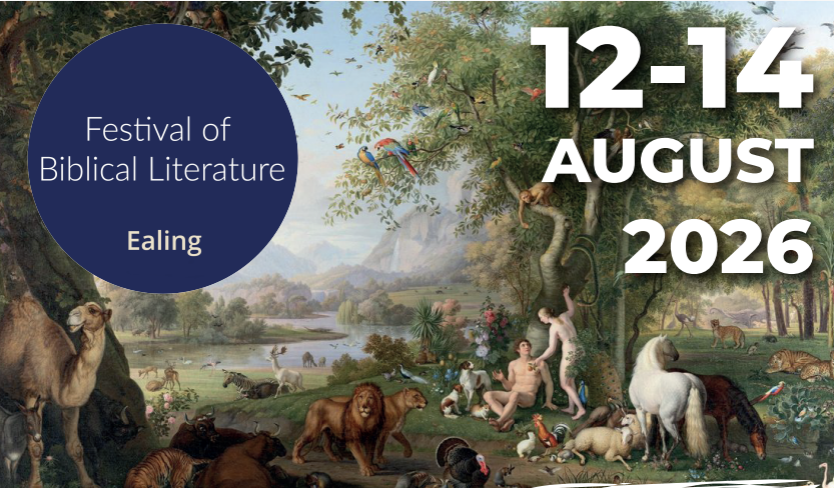
    The Festival of Biblical Literature will be held in Ealing Meeting House between 12th and 14th August 2026. This is the third year for the festival. 

    The festival celebrates the Bible as a collection of literature, with seminars, music and poetry. The purpose of the festival is not to convince people of a particular set of beliefs, but to increase the use and enjoyment of the Bible as a common literary resource. The festival is independent of and does not receive funding from any religious, political or ideological group.

    All the speakers have an academic background and the artists include Philip Gross, a Quaker and winner of the TS Eliot prize. Lunch, tea and coffee are provided.In his Swarthmore lecture, Stuart Masters reminded us of the importance of the Bible to early Quakers.  

    The festival provides an opportunity for Quakers to reflect on how they might use the Bible to challenge people who are quoting from scripture to support views and policies that are not in line with Quaker values.
    For more information and to book tickets go to https://www.festivalofbiblicalliterature.co.uk/

  • Getting to Know: Bernadette, lDG Co-Clerk

    Getting to Know: Bernadette, lDG Co-Clerk

    This post is part of a short series on getting to know some of our newly appointed Friends to QiL committees.

    Name: Bernadette

    Role: Co-Clerk to London Development Group

    Local Meeting: Brentford and Isleworth

    What parts of your service are you looking forward to?: Worship and discernment with other LDG members (and the wider London Quaker community) on how best to bring forward this simplification project for London friends.

    What do you wish more Friends understood about your role?: How many elements there are in the merger work and the delicate balance between getting on with itโ€ฆ and taking the necessary time to get it right.

    What’s your favourite quote from QF&P?: “For a Quaker, religion is not an external activity, concerning a special โ€˜holyโ€™ part of the self. It is an openness to the world in the here and now with the whole of the self. If this is not simply a pious commonplace, it must take into account the whole of our humanity: our attitudes to other human beings in our most intimate as well as social and political relationships. It must also take account of our life in the world around us, the way we live, the way we treat animals and the environment. In short, to put it in traditional language, there is no part of ourselves and of our relationships where God is not present.” – Harvey Gillman, 1988 (21.20)

    Anything else to say?: My thanks for the upholding and the loving support.

  • Two Quakers Who Changed Bermondsey Forever

    Two Quakers Who Changed Bermondsey Forever

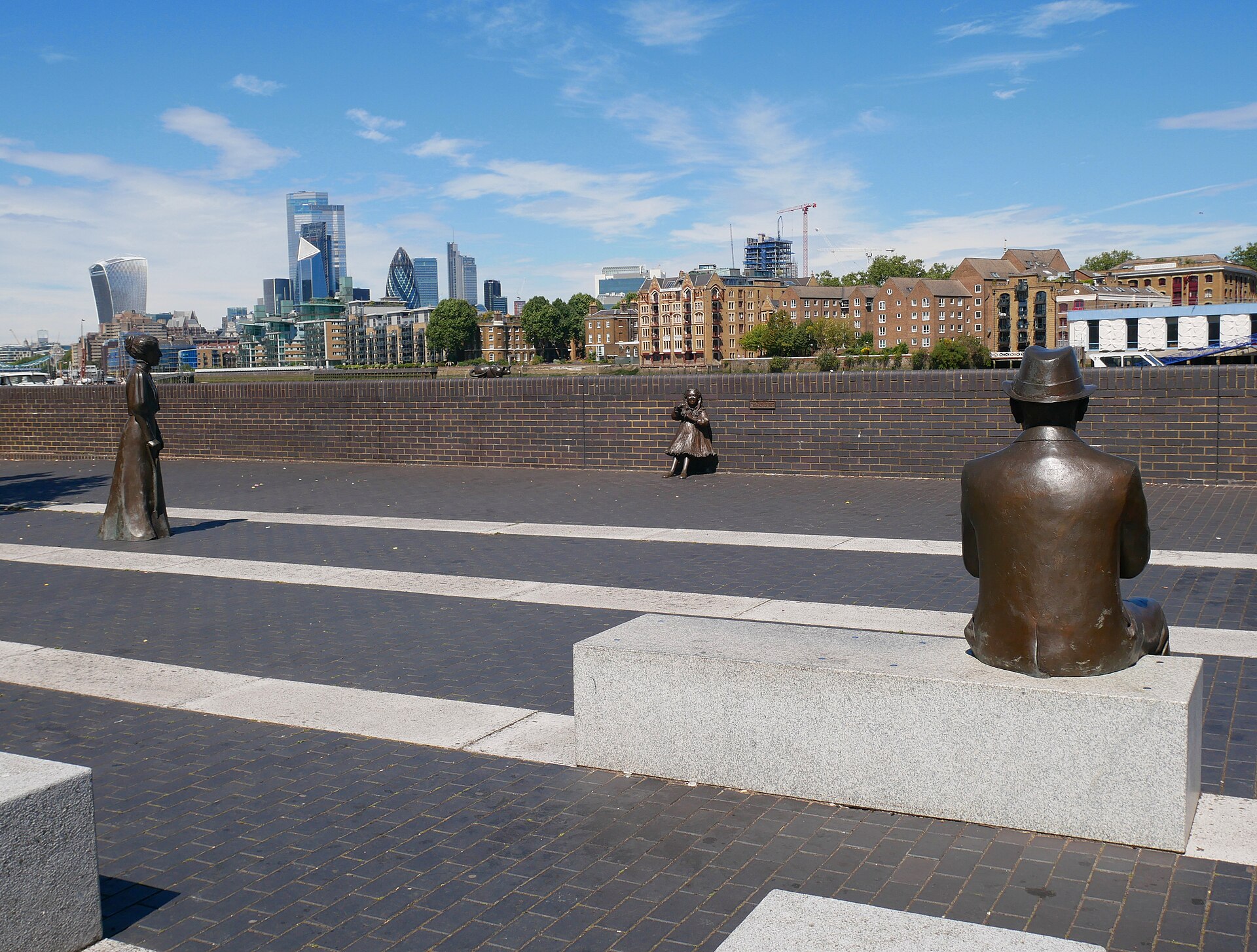
    Featured image: ‘Dr Salter’s Daydream’ by Ethan Doyle White, CC BY 4.0, via Wikimedia Commons.

    Last month, London Link teenage Quakers gathered for a residential weekend at Forest Hill Meeting House in south London – and one afternoon took them on a journey back into one of the most remarkable chapters in the borough’s history.

    Guided by local Quaker Sheila Taylor, the group walked the streets of Bermondsey to trace the lives of Ada and Alfred Salter: a couple who, driven by their Quaker faith and a fierce sense of social justice, set about nothing less than transforming one of the most deprived corners of Victorian and Edwardian London.

    Who were Ada and Alfred Salter?

    When Ada Brown arrived in Bermondsey in the late 1890s as a social worker, she found a neighbourhood of crushing poverty: overcrowded slums, rampant disease, and streets without a single tree. It was there that she met Alfred, a doctor who had turned his back on a comfortable Harley Street career to set up a surgery in a converted shop on Jamaica Road, where he treated poor patients for little or nothing. As his friend and political ally Fenner Brockway later wrote, their partnership on Jamaica Road “brought something little short of a revolution to Bermondsey and its people.”

    They married in 1900 and both committed to the Society of Friends, becoming Quakers. Their faith was inseparable from their politics. They helped found the Bermondsey branch of the Independent Labour Party, and Alfred created in miniature an “NHS before the NHS,” importing the latest medical clinics and facilities into the borough.

    Ada became Mayor of Bermondsey in 1922 – one of the first female mayors in the country – the first ever female Labour mayor. In the same year Alfred was elected Labour MP for Bermondsey West. From these positions they drove through an ambitious programme: slum clearance, new cottage-style housing estates, vastly improved sanitation, and Ada’s beloved Beautification Committee, which had planted 7,000 trees on the new estates and streets of the borough by 1930.

    Their personal tragedy makes their public achievements all the more extraordinary. Their daughter Joyce, born in 1902, was adored throughout Bermondsey. Locals called her “our little ray of sunshine.” In 1910, aged just eight, she caught scarlet fever during an epidemic and died. Ada’s sadness never quite left her; it was in her eyes and in her expression all through the years. And yet both threw themselves still deeper into their work. The grief they experienced spurred them further on to improve conditions in the area.

    London Link Group’s Step Back in Time

    The group’s tour began at Wilson Grove, the cottage estate Ada designed for working-class families each home built to a standard almost unimaginable for Bermondsey at the time, with a living room, scullery, bathroom, hot and cold water. From there they walked to the Thames riverfront, where the Salter statues stand. The sculpture, known as “Dr Salter’s Daydream,” depicts the family at a happy time in their lives. It has its own troubled history: the original statue of Alfred was stolen in 2011, presumed melted down for scrap metal. The community raised ยฃ60,000 to replace it, and at the same time a statue of Ada was added, recognising that she was very much a figure worth honouring in her own right.

    The walk ended in Southwark Park, with a picnic lunch in the Ada Salter Garden, a fitting place to rest among the trees and flowers that Ada fought so hard to bring to her neighbourhood.

    Remembering the Salters

    The Quaker Socialist Society runs the annual Salter Lecture – a highlight of our Birtain Yearly Meeting. Each year a speaker is invited to address themes of social justice, equality, and conscience, values that Ada and Alfred embodied throughout their lives. Past lecturers have included politicians, activists, and environmental thinkers, keeping the Salters’ spirit of principled, faith-rooted radicalism alive into the present day.
  • Getting to Know: Sam

    Getting to Know: Sam

    This post is part of a short series on getting to know some of our newly appointed Friends to QiL committees. The first post is from Sam – co-clerk to Arrangements Committee.

    Name: Sam

    Role: Co-Clerk to QiL Arrangements Committee

    Local Meeting: Westminster local meeting

    What parts of your service are you looking forward to?: I really care about making our Area Meetings feel, light, cheerful and fun. I hope they’re times we can come together and enjoy each other’s comapny as we tackle discernment together. For a long time, I’ve heard about lots of Friends feeling tired and fed up with the process of transitioning into a single London Area Meeting. I so so SO hope that we can soon become unburdened by many of the administrative tasks and that we can start to hear from Local Meetings about areas of real Quaker concern.

    What do you wish more Friends understood about your role?: I’m here to offer my service to you, the Friends who have appointed me through a process of spiritual discernment into this role. Sometimes Friends will approach me ready for a bit of a fight. To mis-quote my testimony to peace, I’m a lover not a fighter… And I really want What’s best for our Quaker communities too.

    What’s your favourite quote from QF&P?: “Creativity is the gift that we were given on the eighth day of creation. In naming and re-making the world we are co-workers with God, and whether we are making a garden or a meal, a painting or a piece of furniture or a computer program, we are sharing in an ongoing act of creation through which the world is constantly re-made.” – Jo Farrow, 1994. This is just a small excert but the whole section (21.38) is great! The mention of the eighth day of creation has left my mind in a tangle a thousand times and has occupied my mind in a lot of Meetings for Worship.

    Anything else to say?: Please come and say hi if you see me at JLAM (or anywhere else!). One thing I love about Quakers in London is that it’s been a great source of new f(F)riendships.

  • Your voice shapes our meetings

    Every item on a JLAM agenda begins with someone in our community being moved to bring something forward, weather they’re part of a local meeting, the London Development Group, or a committee that has been appointed by our Joint London Area Meeting. Here’s how that process works.

    1. Raise it at your Local Meeting – If you feel led to bring a concern or leading forward, Quaker process starts closest to home. Bring it to your Local Meeting, where initial discernment can begin.

    2. Your Local Meeting forwards a minute to Joint London Area Meeting – Once your Local Meeting has reached unity on the matter, it will record a minute and send it forward to Area Meeting – carrying the fruit of your meeting’s discernment into the wider community.

    3. Send it to the co-clerks at least three weeks in advance – This gives the co-clerks the time they need to hold the agenda with care, and allows the Arrangements Committee to prepare the meeting to receive each item well.

    Our next JLAM is on 13th June and the clerks hope to receive any papers or agenda items by 23rd May.

    Ready to get involved? Get in touch with your local meeting Clerk